Views: 0 Author: Site Editor Publish Time: 2026-04-07 Origin: Site


A stainless steel kitchen sink is one of the most popular choices in modern kitchens due to its durability, sleek appearance, and resistance to corrosion. However, daily use often leads to water spots, mineral deposits, food residue, and dullness over time. Knowing how to clean a stainless steel kitchen sink properly helps maintain its shine and prevents long-term damage.
Regular stainless steel sink cleaning not only keeps the sink hygienic but also preserves its protective chromium layer, which prevents rust and staining. With the right techniques and cleaning methods, homeowners can keep their stainless steel kitchen sink looking polished and “showroom ready” for years.
This guide explains safe cleaning methods, chemical-free alternatives, stain removal techniques, and maintenance routines for keeping your sink in excellent condition.
There are many cleaning solutions designed specifically for stainless steel surfaces, but everyday household products can also work effectively.
| Cleaning Product | Best For | Notes |
|---|---|---|
| Dish soap and warm water | Daily cleaning | Safe and gentle |
| Stainless steel cleaner | Restoring shine | Designed for metal surfaces |
| Baking soda | Removing stains | Mild abrasive |
| White vinegar | Water spot removal | Natural acid cleaner |
| Microfiber cloth | Polishing | Prevents scratches |
When cleaning a stainless steel kitchen sink, it is important to avoid harsh materials such as steel wool, abrasive scouring pads, or bleach-based cleaners. These products may damage the sink’s protective finish.
Rinse the sink with warm water.
Apply dish soap using a soft sponge.
Scrub gently in the direction of the stainless steel grain.
Rinse thoroughly.
Dry with a microfiber cloth to prevent water spots.
Following this simple routine helps prevent buildup of soap residue, food particles, and water stains.
Many homeowners prefer natural cleaning methods that avoid harsh chemicals. Several household ingredients can effectively clean a stainless steel kitchen sink.
The combination of baking soda and white vinegar is one of the most effective natural cleaning solutions.
Baking soda acts as a mild abrasive that removes grime.
Vinegar helps dissolve mineral deposits and water spots.
Sprinkle baking soda across the sink surface.
Use a damp sponge to scrub gently.
Spray white vinegar onto the baking soda.
Allow the mixture to fizz for several minutes.
Rinse thoroughly with warm water.
This method helps remove stains while maintaining the integrity of the stainless steel surface.
Another natural method for cleaning stainless steel sinks uses lemon juice and salt.
| Ingredient | Purpose |
|---|---|
| Lemon juice | Natural acid that dissolves stains |
| Salt | Gentle scrubbing agent |
Sprinkle salt over stained areas.
Cut a lemon in half and rub it over the salt.
Scrub gently along the steel grain.
Rinse with warm water.
This technique helps remove grease buildup, minor discoloration, and unpleasant odors.
After cleaning, olive oil can help restore the shine of a stainless steel kitchen sink.
Apply a few drops of olive oil to a microfiber cloth.
Buff the sink surface in the direction of the steel grain.
Wipe away excess oil.
This method creates a polished appearance and helps repel water spots.
Water spots are one of the most common issues affecting stainless steel sinks. These spots are usually caused by minerals left behind when water evaporates.
| Cause | Description |
|---|---|
| Hard water | Contains calcium and magnesium |
| Air drying | Leaves mineral residue |
| Soap buildup | Traps minerals |
Spray white vinegar directly onto the spots.
Let it sit for 3–5 minutes.
Wipe with a soft cloth.
Rinse and dry immediately.
Drying the sink after each use is one of the easiest ways to prevent water spot formation.
Hard water can lead to mineral deposits, also known as limescale, which appear as white or chalky buildup.
Soak a cloth with white vinegar.
Place the cloth over the mineral deposit area.
Allow it to sit for 10–15 minutes.
Scrub gently with a soft sponge.
Rinse thoroughly and dry.
| Method | Effectiveness | Best Use |
|---|---|---|
| Vinegar soak | High | Hard water buildup |
| Baking soda scrub | Moderate | Light deposits |
| Lemon juice | Moderate | Mild limescale |
Avoid using abrasive tools that may scratch the stainless steel finish.
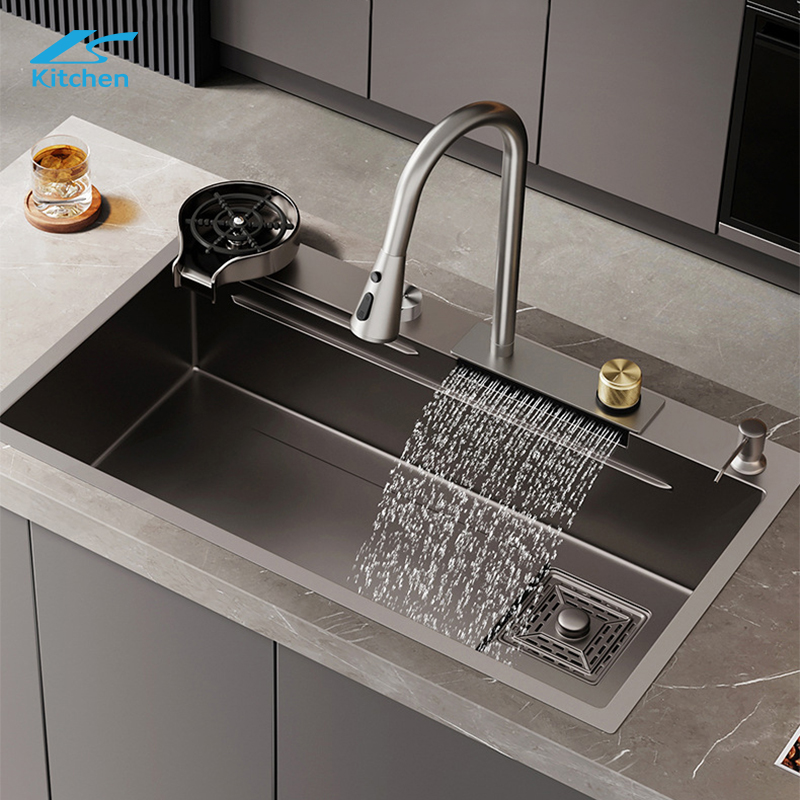
Keeping a stainless steel kitchen sink looking new requires consistent maintenance. A structured cleaning routine helps maintain its shine and hygiene.
Simple daily habits can prevent stains and buildup.
Daily Sink Care Checklist
Rinse the sink after each use
Wipe dry with a microfiber cloth
Remove food debris from the drain
Avoid leaving metal cookware in the sink overnight
These habits reduce the risk of rust spots, water stains, and mineral buildup.
Performing a deeper cleaning once a week helps maintain the sink’s appearance.
Sprinkle baking soda across the sink.
Scrub gently with a sponge.
Rinse with warm water.
Spray vinegar for additional cleaning.
Rinse and dry completely.
Weekly cleaning helps remove oil residue, soap film, and accumulated grime.
Monthly polishing restores the shine of a stainless steel kitchen sink.
Clean the sink thoroughly.
Apply olive oil or a stainless steel polish.
Buff with a microfiber cloth.
This step enhances the reflective appearance of the sink.
| Tip | Benefit |
|---|---|
| Clean along steel grain | Prevents scratches |
| Dry after use | Avoids water spots |
| Avoid harsh cleaners | Protects finish |
| Use sink grids | Prevents scratches |
These practices help maintain the durability and aesthetic appeal of a stainless steel kitchen sink.
The kitchen sink is one of the most frequently used fixtures in any home. Regular stainless steel sink cleaning ensures not only a hygienic food preparation area but also a visually appealing kitchen centerpiece.
Proper maintenance protects the sink’s corrosion resistance, prevents mineral buildup, and maintains its smooth metallic finish. As kitchen design trends continue to favor minimalist stainless steel fixtures, keeping the sink polished and spotless contributes significantly to the overall kitchen aesthetic.
By following a routine of daily cleaning, weekly deep cleaning, and monthly polishing, homeowners can extend the lifespan of their sink and maintain its professional, showroom-quality appearance.
How often should I clean a stainless steel kitchen sink?
A stainless steel sink should be rinsed and wiped daily, with deeper cleaning performed at least once per week.
Can baking soda damage stainless steel sinks?
No. Baking soda is a mild abrasive that is generally safe for cleaning stainless steel when used gently.
What causes rust spots in stainless steel sinks?
Rust spots may occur when iron particles from cookware remain on the sink surface for extended periods.
Is vinegar safe for stainless steel sinks?
Yes. White vinegar is commonly used to remove water spots and mineral deposits.
How can I make my stainless steel sink shine again?
After cleaning, buffing the sink with a small amount of olive oil or stainless steel polish can restore its shine.

