Views: 0 Author: Site Editor Publish Time: 2026-06-18 Origin: Site


Outfitting a restaurant kitchen demands rigorous attention to detail, especially when selecting core wash-station equipment. A properly specified Commercial Sink serves as the fundamental backbone of your daily back-of-house operations. It acts as a high-volume workflow engine and a vital compliance checkpoint for food safety. Unfortunately, a mismatched unit inevitably leads to health inspection failures, severe operational bottlenecks, and unplanned downtime.
Facility planners often struggle to navigate conflicting advice regarding steel gauges, exact compartment requirements, and tight spatial limitations. Premature equipment failure quickly disrupts service and severely impacts your operational efficiency during peak dining hours. When staff members cannot wash wares quickly, the entire kitchen slows down.
This comprehensive guide provides an evidence-based framework to evaluate materials effectively and mitigate these risks. You will discover how to properly configure compartments specifically for your unique workflow demands. We will also outline proven strategies to help you confidently select the right manufacturing partner for seamless equipment integration.
Compliance First: Local health codes dictate your baseline requirements (e.g., NSF certification, specific drainboard lengths).
The Standard for Warewashing: A triple bowl commercial sink is legally required in most jurisdictions for the standard "Wash, Rinse, Sanitize" manual workflow.
Material Dictates Lifespan: A true commercial stainless steel sink should utilize 304-grade stainless steel (14- or 16-gauge) for maximum corrosion resistance and structural integrity.
Customization Mitigates Risk: Odd floor plans or high-volume constraints often require a custom commercial sink supplier rather than forcing an off-the-shelf fit.
Before examining specific product features, you must establish baseline success criteria. Local health department codes strictly dictate equipment standards across every municipality. Consulting these regulations must always precede procurement. Health inspectors evaluate your setup against specific regional mandates before granting an operating permit. Ignoring these guidelines often results in delayed openings or mandatory equipment replacements. A common mistake involves purchasing equipment before verifying local drainboard length requirements.
NSF certification remains a non-negotiable standard for food safety. Inspectors specifically look for the NSF mark to verify cleanability and hygienic design. This certification ensures all welded seams remain completely smooth and free of dangerous crevices. It guarantees the unit will not harbor harmful bacteria in hidden corners. You must visually verify this certification stamp on any unit you consider purchasing. Buying uncertified equipment introduces immense regulatory risk.
Mapping your daily workflow dictates the physical footprint of your equipment. You must assess the peak volume of wares passing through your kitchen daily. Evaluate your available square footage to avoid cramped, unsafe working conditions for your dishwashing staff. Pay close attention to the proximity of grease traps and floor drains. Proper alignment prevents plumbing complications and supports efficient manual warewashing. Water must flow effortlessly from the drain directly into the floor sink without causing slipping hazards.
Best Practice: Always map the dirty-to-clean directional flow on your floor plan before finalizing dimensions. Dirty dishes should enter on one side, move through the washing process, and exit as sanitized wares on the opposite side without paths crossing. This strict separation prevents dangerous cross-contamination events during busy service periods.
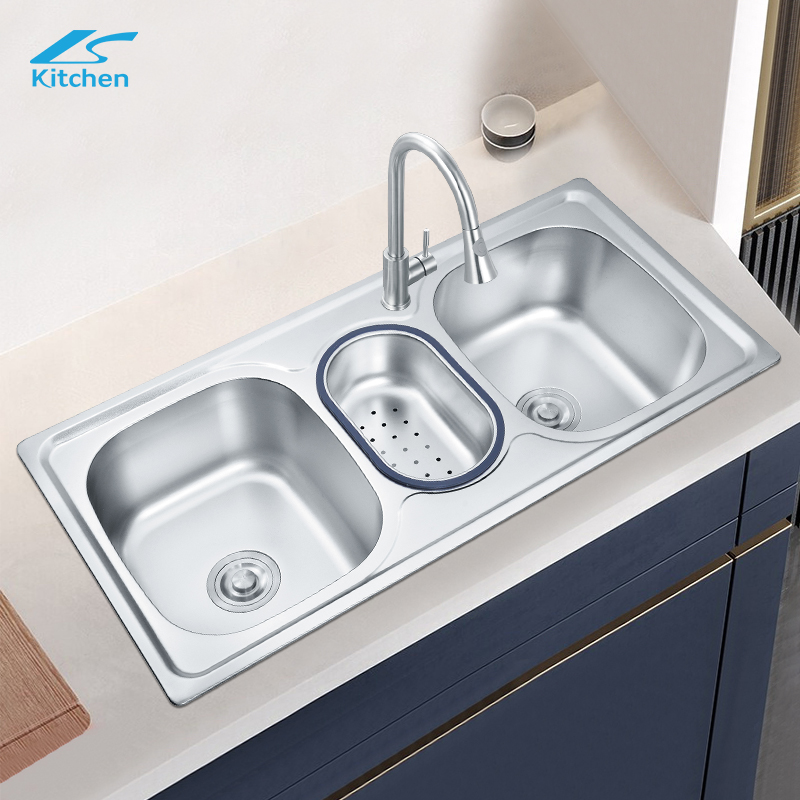
Different daily tasks require specifically configured compartments to maintain food safety standards.
The triple bowl commercial sink stands as the cornerstone of manual warewashing. Health regulations typically mandate this configuration for the standard wash, rinse, and sanitize process. You must carefully evaluate bowl depth against your largest pot size. Deep bowls accommodate bulky items easily and reduce excessive splashing. However, excessively deep compartments often cause ergonomic strain for staff members leaning over them repeatedly. A 12-inch to 14-inch depth usually provides an ideal balance for most restaurant applications.
One- and two-compartment variations serve highly specific prep stations. You might install a single compartment strictly for thawing frozen proteins safely under running water. Two-compartment versions work perfectly for washing fresh produce away from raw meat zones. These units also excel in space-restricted environments. Restaurants often deploy them when a commercial dishwasher handles the primary cleaning load. They streamline specific prep tasks without occupying unnecessary floor space.
Dedicated handwashing sinks carry strict compliance warnings. Health codes require these units to remain entirely separate from food prep areas. You cannot use them for warewashing or dumping dirty water under any circumstances. Install them in easily accessible locations to promote consistent staff hygiene. A frequent violation involves blocking hand sinks with temporary storage. You must ensure the path to these wash stations remains entirely unobstructed at all times.
Material selection directly influences equipment longevity and daily hygiene. A true commercial stainless steel sink must withstand relentless daily abuse. Hot water, harsh chemical sanitizers, and heavy metal pots constantly impact the surface.
Steel grade dictates the corrosion resistance of the unit. Type 304 represents the undisputed industry standard for professional kitchens. It contains high levels of nickel and chromium. This specific chemical composition makes it highly resistant to rust and acidic food environments. Type 430 offers a lower upfront expense but contains zero nickel. Budget buyers must heed this risk warning immediately. Type 430 remains highly prone to pitting, staining, and rust over time. Investing in Type 304 prevents costly replacements down the line.
Thickness, measured by gauge, determines structural durability. A lower number indicates thicker steel. You must align the gauge with your expected daily workload.
Steel Gauge | Durability Level | Ideal Application |
|---|---|---|
14-Gauge | Heavy-Duty (Premium) | High-volume warewashing, heavy pots |
16-Gauge | Medium-Duty (Standard) | General restaurant use, balanced workloads |
18-Gauge | Light-Duty (Economy) | Handwashing, low-impact prep tasks |
14-Gauge: This premium, heavy-duty option resists denting perfectly. It easily handles the constant impact of high-volume pots and cast-iron pans. Busy commercial environments benefit significantly from this robust thickness.
16-Gauge: Many facilities choose this thickness for primary wash stations. It provides the standard balance of acceptable durability and reasonable upfront expenditure. It withstands moderate daily use without buckling.
18-Gauge: This light-duty steel serves only low-impact applications. You should restrict 18-gauge usage to dedicated hand sinks or light prep stations. Dropping heavy cookware into an 18-gauge bowl often causes immediate dents and structural damage.
Implementation realities heavily influence your final selection. Equipment features must match your physical kitchen environment precisely.
Drainboards play a critical role in directional workflow and drying capacity. You must evaluate left, right, or dual drainboard setups carefully. Your layout must support a clear dirty-to-clean flow. This separation prevents dangerous cross-contamination during active service. Ensure the drainboards feature proper pitched angles. This sloping guarantees water flows back into the bowl instead of pooling on the surface.
Backsplashes and wall protection require precise sizing. Adequate height prevents water damage and mold growth behind the unit. It stops bacterial growth in hidden wall crevices where cleaning tools cannot reach. Always check local codes for minimum backsplash height mandates.
The foundational supports demand equal scrutiny. Stainless steel legs outlast cheaper galvanized steel alternatives significantly. Galvanized legs eventually rust when exposed to harsh floor cleaning chemicals. Adjustable bullet feet allow precise leveling on uneven, sloped commercial kitchen floors. Strong welded gussets ensure the legs remain securely attached during heavy usage.
Plumbing compatibility often trips up unwary buyers. You must verify pre-drilled faucet holes match your hardware plans. Splash-mount setups attach directly to the vertical backsplash. Deck-mount configurations sit on the flat surface behind the bowls. Ensure your selected faucet flow rates adequately match the total bowl capacity. A high-flow faucet paired with a small drain causes immediate overflow hazards.
When evaluating accessories, consider these common structural checkpoints:
Verify drainboard pitch angles for rapid water runoff.
Ensure all corners feature coved designs for easy wiping.
Confirm pre-drilled holes align correctly with your faucet specifications.
Check leg gussets for heavy-duty, continuous welding.
Inspect the rolled front edges for ergonomic comfort and spill prevention.
Sometimes standard dimensions simply cannot accommodate a unique kitchen layout. Odd floor plans or extreme volume constraints often require specialized fabrication.
You must identify specific triggers for custom solutions. Structural pillars blocking standard placements necessitate modified shapes. Non-standard wall angles prevent off-the-shelf units from sitting flush against the wall. Historic buildings frequently feature irregular plumbing access points. When these edge cases arise, a reliable custom commercial sink supplier becomes essential. They engineer equipment to fit your exact spatial realities perfectly. Attempting to force a standard unit into a non-standard space creates hygiene gaps and compliance violations.
Evaluating a manufacturing partner requires strict vetting logic. Use this checklist to validate their capabilities.
Evaluation Metric | What to Verify | Why It Matters |
|---|---|---|
Engineering Tolerances | Do they guarantee exact dimensional accuracy? | Prevents installation delays caused by mismatched measurements. |
Lead Times | Can they deliver within your opening schedule? | Keeps construction and inspection timelines safely on track. |
Warranties & Support | Do they cover weld integrity and material defects? | Ensures post-sale accountability and reduces replacement risks. |
Design Consultation | Do they provide detailed CAD drawings before fabrication? | Allows you to spot potential workflow issues before metal is cut. |
A verified custom partner mitigates significant vendor risk. Ask them directly about their specific engineering tolerances. They must guarantee precise dimensional accuracy down to the fraction of an inch. Review their stated lead times rigorously. They must deliver the unit well before your scheduled health inspection. Finally, scrutinize their warranty terms. Demand clear post-sale accountability for material defects and weld integrity.
Selecting the right wash-station equipment directly impacts operational success and food safety. An upfront investment in higher gauge 304 stainless steel prevents costly health code violations. Proper compartment sizing eliminates daily workflow bottlenecks. Prioritizing quality materials and precise configurations ensures your kitchen operates smoothly during peak hours. You protect your staff from ergonomic strain and protect your business from regulatory fines.
Take these actionable next steps to finalize your procurement:
Measure your exact floor space, noting any wall irregularities and plumbing access points.
Confirm your compartment depth and drainboard length requirements directly with the local health inspector.
Request comprehensive quotes based strictly on specific gauge, steel grade, and dimensional needs.
Review the manufacturer warranties to ensure long-term protection against material defects.
A: The typical depth ranges from 12 to 14 inches. This size easily accommodates most standard cookware and prevents excessive splashing. Manufacturers also offer 10-inch and 16-inch variations. You should select the depth based strictly on your specific warewashing needs and the size of your largest pots. Extremely deep bowls can cause ergonomic strain.
A: You must avoid leaving chlorine-based sanitizers sitting in the bowls for extended periods. Always use non-abrasive cleaning pads to protect the surface finish from scratches. Harsh wire brushes destroy the protective chromium layer. Most importantly, ensure you purchase 304-grade steel, as it naturally resists rust far better than cheaper 430-grade alternatives.
A: Yes, local municipalities almost universally require grease traps for three-compartment and prep units. These devices capture fats, oils, and grease before they enter the main plumbing system. They are legally mandated to protect city sewers from severe blockages and costly damage. Failing to install one often results in immediate health inspection failures.

