Views: 0 Author: Site Editor Publish Time: 2026-06-26 Origin: Site


Selecting the metal grade for your project determines a fixture's lifespan, maintenance overhead, and long-term durability. It remains the single most critical factor you must evaluate before installation. Visually, new 201 and 304 sinks look completely identical right out of the box. They share the same brushed or polished finishes. This similarity creates significant procurement blind spots for buyers. You might unknowingly install the wrong grade, leading to a high risk of premature rust and structural failure.
We need an evidence-based comparison to cut through aggressive marketing noise. This guide helps you make a technically sound decision. You will learn the hidden metallurgical differences, performance variations, and verification methods required to ensure your next sink lasts for decades. We will strip away the confusion. Let us dive directly into the science and practical realities behind these essential materials.
304 is the industry standard for high-moisture, heavy-use environments due to its high nickel and chromium content, offering superior rust resistance.
201 offers significant upfront cost savings but sacrifices corrosion resistance, making it suitable only for dry climates or strict budget-capped, low-use projects.
Manufacturing methods matter: A 201/304 stainless steel press sink behaves differently during stamping; 304’s higher ductility prevents micro-tears that harbor bacteria.
Verification is essential: Partnering with a certified custom stainless steel sink factory is the most reliable way to avoid mislabeled "fake 304" products.
Material composition directly dictates product failure rates. If you choose the wrong metal, the sink will corrode. It really is that simple. Understanding the underlying chemistry helps you predict how a fixture will behave over time. You cannot visually inspect a sink and know its exact alloy makeup. We must look at the atomic level.
The 304 grade features an industry-standard 18% chromium and 8% nickel composition. The 201 grade contains significantly lower nickel. Manufacturers replace this missing nickel with manganese and nitrogen. Chromium acts as the primary hero element here. It forms an invisible, self-healing protective oxide layer on the metal's surface. This passive film prevents oxygen and water from reaching the underlying steel matrix.
Nickel provides essential structural durability. It enhances the chromium oxide layer. Nickel also delivers exceptional resistance to dietary acids and harsh household cleaners. A high nickel content ensures the metal remains stable across extreme temperature fluctuations. You can pour boiling water into a 304 basin without altering its structural integrity.
Manganese makes 201 stainless steel physically harder than 304. However, this hardness comes at a steep operational price. The reduced nickel leaves 201 highly susceptible to pitting corrosion. When exposed to salt, acidic foods, or standing water, the protective oxide layer breaks down quickly.
Manganese cannot regenerate the passive oxide film as effectively as nickel. You will often see rust spots forming in months rather than years. We frequently observe this failure in environments with poor ventilation. Using 201 requires strict drying protocols after every single use.
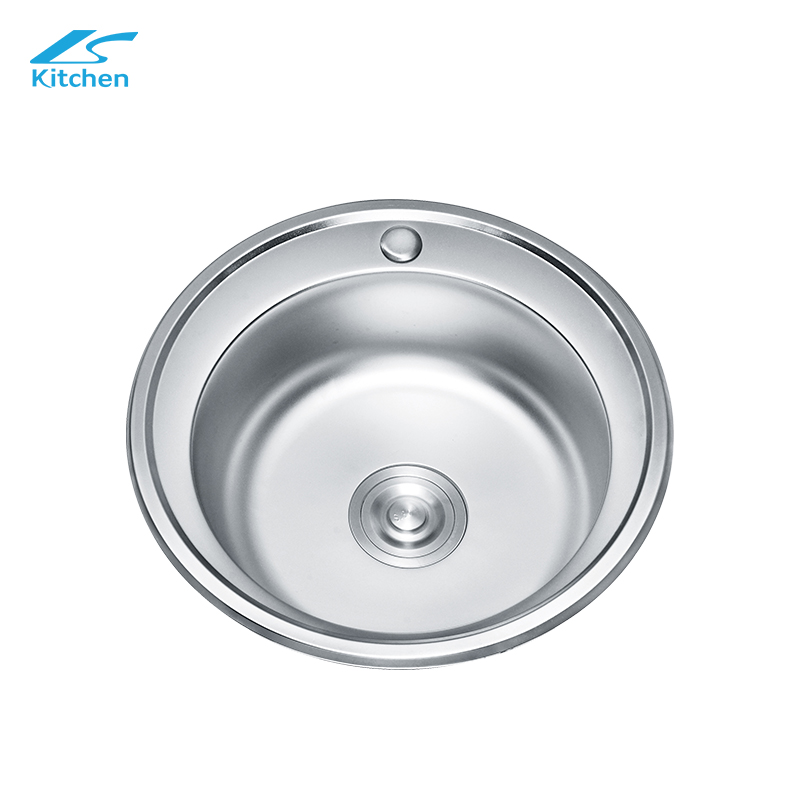
Let us compare these two grades against real-world kitchen variables. A kitchen represents a harsh, punishing environment. It involves boiling water, heavy pots, sharp knives, and constant moisture exposure. We must evaluate how these metals perform outside the laboratory.
Performance Metric | 304 Grade | 201 Grade |
|---|---|---|
Corrosion Resistance | Excellent in high moisture | Poor, requires constant drying |
Acid Resistance | High (resists tomato sauce, lemon) | Low (prone to pitting) |
Ductility (Forming) | High (smooth corners) | Low (stiff, risks cracking) |
Maintenance Needs | Low (standard cleaning) | High (wipe dry after use) |
The 304 grade withstands constant moisture easily. You can use standard household cleaners without fear of damaging the surface. Dietary acids like lemon juice, vinegar, or tomato sauce will not cause pitting. It thrives in high-use, wet areas. You can leave wet sponges in the basin overnight without triggering a rust bloom.
Conversely, 201 carries a rapid degradation risk. Humid environments or coastal areas accelerate its rust formation drastically. Salt air infiltrates kitchens easily. A 201 sink exposed to coastal air pits very quickly. It demands constant drying and extreme care. You must wipe it down completely after washing dishes.
Materials react differently during the deep-draw pressing process. Pressing a sink forces a flat sheet of metal into a deep bowl shape using a massive hydraulic ram. The 304 grade boasts high ductility. This flexibility allows for deeper, seamless bowls without compromising structural integrity.
The metal stretches smoothly around the punch die. It maintains consistent thickness even at the tightest corners. In contrast, 201 is much stiffer. It is prone to micro-fissures during the heavy stamping process. These tiny cracks remain invisible to the naked eye. However, they can harbor dangerous bacteria or weaken the corners entirely. Stamping 201 often requires shallower bowl depths to prevent the metal from tearing.
You must move beyond the initial sticker tag to evaluate true long-term value. We must look at the ripple effects of replacing failed fixtures. A cheap sink today often becomes an expensive construction project tomorrow.
Short-Term Savings: The 201 grade undeniably provides an upfront raw material cost advantage. You will notice immediate savings on your procurement ledger. This initial advantage tempts many buyers into choosing 201 for large-scale developments.
Long-Term Liability: Consider the intensive labor involved in swapping a rusted sink within one to three years. You must disconnect the plumbing. You face heavy countertop disruption. You might tear the silicone seals or damage the surrounding cabinetry. Sometimes, you uncover hidden water damage from undetected micro-leaks. The replacement labor far outweighs the initial metal savings.
Verdict by Project: The 304 grade yields a much higher ROI for residential builds and commercial kitchens. It installs once and lasts a lifetime. The 201 grade mathematically makes sense only for temporary installations. You might also use it for highly aggressive cost-cutting scenarios where lifespan is simply not a priority. For example, temporary housing or dry utility rooms might tolerate a 201 fixture safely.
We must address a tough industry reality. Many products arrive completely mislabeled. You will often find 201 stamped proudly as 304. This fraud ruins projects, leads to angry end-users, and destroys professional reputations.
Identifying risky suppliers requires vigilance. You can spot common warning signs before you finalize an order. Keep an eye out for these specific issues:
Unusually Low Quotations: If an offer seems too good to be true, it generally is. Raw metal markets are globally standardized. Massive discounts indicate inferior alloys.
Lack of Certification: Suppliers who hesitate to provide official paperwork are hiding something.
Generic Packaging: Unbranded, flimsy packaging often points to unverified secondary market sources.
Refusal of Inspections: A credible source welcomes third-party quality control inspections before shipping.
Many buyers rely exclusively on the "magnet test." They believe 304 is never magnetic. This assumption is false. Both grades can be entirely non-magnetic in their raw sheet form. However, manufacturing processes like pressing, stamping, and bending can introduce slight magnetism to genuine 304. The internal crystal structure shifts during stress. Therefore, the magnet test is highly unreliable for final material selection.
Instead, we recommend chemical drop tests. Manganese testing liquids quickly reveal if a sink is 201. You clean a small hidden spot, apply the reagent drop, and wait. If the liquid turns red, you have high manganese content. For ultimate proof, request spectrometer reports from your suppliers. An XRF spectrometer gun analyzes the exact chemical makeup in seconds, proving the chromium and nickel percentages beyond any doubt.
Once you choose your material, you must source it safely. Partnering with the right manufacturer eliminates the guesswork from your procurement pipeline. You need a facility that values rigorous engineering standards.
Look for manufacturers who openly discuss their raw material sourcing. Reputable names in the steel industry include POSCO and Baosteel. A reliable partner should easily provide verifiable mill test certificates (MTC) for every batch. An MTC lists the precise chemical breakdown and heat number of the steel coil. If a supplier cannot produce an MTC, you should walk away immediately.
Forming 304 requires specific engineering expertise. Ensure the manufacturer possesses the correct heavy-duty tooling. They must handle the deep-draw process without dangerously thinning the corners. Ask them about their die maintenance schedules. Well-maintained dies prevent surface galling and ensure uniform thickness across the entire basin.
Manufacturer Quality Assurance Checklist | ||
Evaluation Area | Standard Practice | Risk Indicator |
|---|---|---|
Material Traceability | Provides Mill Test Certificates (MTC) | Cannot verify coil origins |
Standard Compliance | Maintains cUPC, CE certifications | Lacks regional testing marks |
Testing Protocols | In-house salt-spray testing | Relies on visual checks only |
Look for strict standard compliance within the facility. Certifications like cUPC or CE are mandatory for quality builds. These standards mandate rigorous testing for load bearing and proper drainage flow. Reputable facilities also utilize internal salt-spray testing chambers. They expose random sink samples to an aggressive saline mist to verify rust resistance before authorizing a shipment. This internal QA step guarantees you receive exactly what you ordered.
While the 201 grade has some niche applications in dry environments, 304 remains the uncompromising standard. It delivers a highly durable, hygienic fixture for almost any setting. Do not let upfront raw material savings blind you to long-term replacement headaches. Rust failure damages surrounding cabinetry and ruins your hard work.
Take these actionable next steps to secure your investment:
Always request verifiable material certificates from your suppliers before placing a deposit.
Perform random chemical drop tests on inbound sample batches to verify the manganese levels.
Demand structural thickness reports to ensure the corners have not thinned dangerously during pressing.
Contact a vetted manufacturer directly for a transparent, data-driven project consultation.
A: Yes. Due to lower nickel and higher manganese content, it is highly vulnerable to rust when exposed to moisture, salt, and acidic foods. It lacks the robust, self-healing oxide layer found in premium grades.
A: No. Both can receive identical brushed or polished finishes. They look exactly the same out of the box. Chemical drop testing or handheld spectrometer analysis is required for definitive proof.
A: Its higher ductility prevents the metal from cracking or thinning dangerously at the corners during the heavy stamping process. It flows smoothly over the tooling die, ensuring a uniform, seamless bowl.
A: No. While 304 is naturally non-magnetic in sheet form, the manufacturing processes (like pressing and bending) can introduce slight magnetism. This makes the magnet test unreliable for final material selection.

